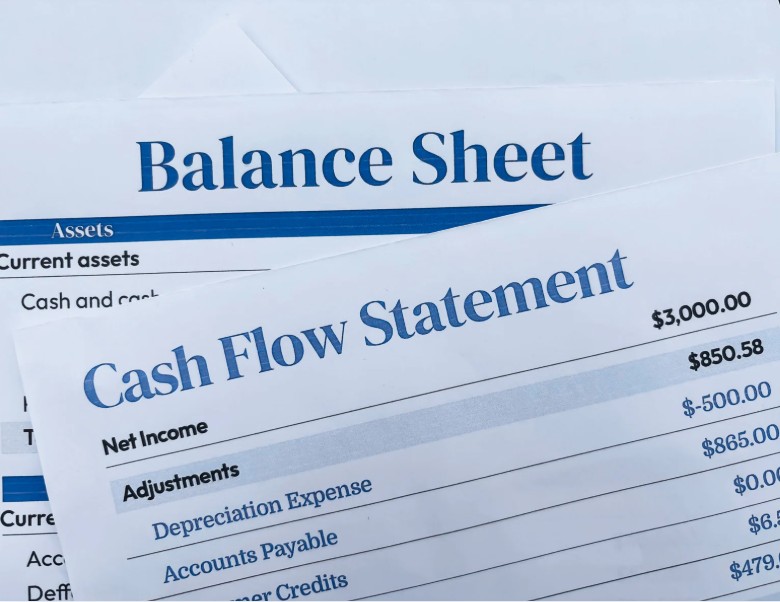
Most business owners rely on the Balance Sheet and Profit & Loss Statement to understand their financial position. They’re essential — two of the three primary sources of truth in any business.
But there’s a third report that often reveals the real story behind the numbers:
The Statement of Cash Flows.
It’s the first report I open because it answers a question that shapes everything else:
Is the business generating or consuming cash right now?
That single insight can reveal more about the health of a business than any other report — especially when something “feels off” even though the numbers appear fine.
When the Numbers Look Fine… But Don’t Feel Fine
It’s not unusual for a business owner to say:
“The numbers say we’re fine, but it doesn’t feel fine.”
And they’re not wrong.
The P&L may show a profit.
The Balance Sheet may look stable.
The bank balance may appear healthy.
But instinct is often responding to something the owner can’t articulate yet — a timing issue, a cash strain, a pattern that hasn’t fully surfaced.
This is where the Statement of Cash Flows becomes invaluable.
The First Red Flag: Negative Operating Cash Flow
One of the clearest early warning signs in bookkeeping is when the P&L shows positive net income…
…but the Statement of Cash Flows shows negative cash from operating activities.
That mismatch doesn’t automatically mean the business is failing.
It often means something simpler:
- income recorded but not collected
- expenses recorded but not paid
- timing mismatches
- unreconciled accounts
- missing adjustments
The Statement of Cash Flows doesn’t hide these issues.
It exposes them — quickly.
Digging Deeper: The Reconciliation Gap
When the Statement of Cash Flows reveals negative or inconsistent activity, the next step is to check the reconciliations. And this is where the real story often emerges.
Common patterns include:
- two or more months of unreconciled bank activity
- deposits recorded but never matched
- vendor payments entered twice
- loan payments categorized entirely as expenses
- owner draws buried inside operating expenses
- credit card activity not fully captured
None of these errors are unusual.
They’re the natural result of a business owner trying to keep up with the books while running the business.
But together, they distort the financial picture.
The P&L may look fine.
The Balance Sheet may look fine.
The bank balance may look fine.
The Statement of Cash Flows is the only report that reveals the truth behind the numbers.
When the Books Are Clean but the Signals Aren’t
Even when the books are fully updated, reconciled, and accurate, the Statement of Cash Flows can still reveal patterns that deserve attention.
Clean books don’t automatically mean healthy cash flow.
It’s not uncommon for a business to show:
- positive net income but thin operating cash flow
- heavy financing activity from frequent owner draws
- investing activity that outpaces available cash
- timing mismatches that create pressure even when the P&L looks strong
None of these automatically signal a crisis.
But they do signal the need for a level‑setting conversation before the pattern drifts into something harder to manage.
This is where bookkeeping moves beyond record‑keeping.
A good bookkeeper uses the Statement of Cash Flows as an early‑warning system — a way to identify trends that may require collaborative investigation. Sometimes that means reviewing spending patterns with the owner. Sometimes it means discussing owner compensation or debt structure. And sometimes it means looping in the CPA to ensure tax planning and cash planning are aligned.
The goal isn’t to diagnose everything at once.
The goal is to catch the signal early, understand what’s driving it, and work together before the situation runs away on its own.
Rebuilding the Cash Picture
Once the reconciliations are complete and the SOCF is reviewed in context, the cash picture often becomes clearer:
- operating cash flow aligns with actual activity
- financing activity reflects real owner draws and loan payments
- investing activity shows true capital commitments
- the net cash increase or decrease matches the bank balance
This alignment is powerful.
It gives the owner a financial picture that finally matches reality — not just the accounting version of reality.
And that alignment is what restores confidence.
The Takeaway
This case isn’t about a failing business.
It’s about incomplete visibility creating a false sense of stability.
The Statement of Cash Flows doesn’t replace the Balance Sheet or P&L — it confirms them.
It reveals the cash reality behind the numbers.
And it guides the conversations that keep a business financially steady.
That’s why it’s the first report I open.
Why This Matters for Owners
Most owners rely on instinct or bank balances to judge financial health.
But instinct doesn’t reveal timing.
And bank balances don’t reveal obligations.
The Statement of Cash Flows gives a quick, big‑picture view that helps answer:
- Is the business generating cash from operations?
- Is cash being consumed by investments?
- Are owner draws or loan payments draining liquidity?
- Do the numbers on the Balance Sheet and P&L actually hold up?
It’s one of the most powerful — and most overlooked — tools for financial clarity.
Closing Thought
Cash flow isn’t about the balance.
It’s about the movement.
And the Statement of Cash Flows is the report that shows it.
If your books feel out of sync with reality, our Cleanup Services page explains how we rebuild a clean financial foundation.
For ongoing support, you can review our Pricing page to understand how services are structured.